
Application Testing Services in the USA That Expose What Attackers Target
Web applications, mobile apps, and APIs are the most frequently targeted attack surfaces in modern business environments. CyberZEALS provides application testing services across the USA that go beyond automated scanning to find the logic flaws, authorization failures, and trust boundary weaknesses that attackers exploit but scanners never find.

Application Penetration Testing Services That Test for Real-World Risk
Application penetration testing services place a skilled security professional in the role of an attacker who is specifically targeting your application. Unlike automated scanning, which matches patterns against a known vulnerability database, manual application penetration testing attempts to actually exploit what it finds. That distinction matters because many vulnerabilities only become dangerous when combined, when exploited in a specific sequence, or when an attacker understands the business context well enough to target the right data rather than the noisiest vulnerability.
Three Disciplines Behind Our Application Security Testing
Application security testing combines automated scanning, manual testing and risk-based review to find real vulnerabilities before they affect your users, data, or business operations.
- Threat Modeling Before Our Application Tester Begins
Our application tester maps the attack surface of your specific application before testing begins identifying trust boundaries, data flows, authentication mechanisms, and authorization logic that determine where testing effort will produce the highest-impact findings.
- Interactive Application Security Testing Under Load
Interactive application security testing examines your application while it is running under realistic conditions, revealing injection vulnerabilities, authentication bypasses, and session management weaknesses that static code analysis and unauthenticated scanning cannot reach.
- Validated Web App Testing With Proof of Concept
Every finding from our web app testing process is validated through controlled exploitation before it enters the report. Your team receives confirmed vulnerabilities with reproduction steps, not a list of scanner hits that may or may not represent real risk.

Four Platforms Our Web Application Penetration Testing Services Cover
Our web application penetration testing services cover modern apps, APIs, portals, and cloud-based platforms to uncover exploitable risks before attackers do.
Web Application Testing Services for Every Stack
Our web application testing services cover SaaS platforms, e-commerce sites, customer portals, and internal web tools built on any technology stack. Testing includes authentication and session security, access control validation, injection attack surfaces, file handling weaknesses, and the business logic paths that allow your application to be abused in ways that pure vulnerability scanning cannot detect. Findings are mapped to OWASP Top 10 categories with specific remediation guidance for your technology stack.
Mobile Application Penetration Testing Services for iOS and Android
Our mobile application penetration testing services cover both iOS application testing and Android application testing through static binary analysis, dynamic runtime testing, and network communication review. We assess data storage security, inter-process communication controls, certificate pinning implementation, and reverse engineering exposure for iOS application testing. For Android application testing, we examine exported component security, intent handling, and the device-level attack surfaces that mobile threat modeling must account for.
API Security Through Application Penetration Testing Services
APIs deserve the same depth of application penetration testing services that web applications receive, because they frequently expose the same business logic and data access paths with less visibility and less client-side validation protecting them. Our API testing covers authentication token handling, rate limiting enforcement, object-level authorization validation for REST and GraphQL endpoints, and mass assignment vulnerabilities that allow users to modify data fields they were not meant to control.
Legacy and Desktop Application Testing Service
Organizations running thick-client or legacy desktop applications need the same quality of application testing service as modern web platforms. We assess memory handling vulnerabilities, local privilege escalation paths, insecure inter-process communication, credential storage practices, and network communication security for desktop applications that were built before current secure development standards were established.
Application Pen Testing Built Around Real Attack Behavior
CyberZEALS tests mobile and web applications the way attackers approach them manually checking authentication, access control business logic and exploitable conditions before they become real security risks.

How Our Application Pen Testing Engagement Runs
Our application pen testing engagement follows a clear process: scope review, manual testing, risk validation, reporting, remediation guidance, and retesting.
Target Definition and Test Boundary Agreement
Application scope, testing depth, authentication levels, and safe harbor documentation confirmed before any testing activity begins so the engagement is legally bounded and operationally clear.
Application Architecture and Boundary Mapping
Your application’s architecture reviewed to identify data flows, external integrations, authentication mechanisms, and the trust boundaries that determine where an attacker’s highest-impact targets are located.
Automated and Manual Web Application Testing
Automated web application testing used to build an initial vulnerability inventory quickly, followed by manual testing that validates, expands, and contextualizes what the automated tools found within your specific application’s behavior.
Controlled Attack Simulation Against Confirmed Vulnerabilities
Confirmed vulnerabilities exploited in a controlled manner to determine actual impact what data is accessible, what functions can be abused, and what further access each finding could enable for an attacker who chose to go further.
Post-Access Application Penetration Testing Assessment
From achieved access, further application penetration testing determines whether privilege escalation, horizontal access to other user accounts, or lateral movement to backend systems is possible from the initial compromise position.
Technical Report and Walkthrough Session
A detailed findings report with CVSS-rated vulnerabilities, proof-of-concept evidence, and remediation guidance delivered alongside a walkthrough session where your team can ask questions and confirm priorities before remediation work begins.
What Our Application Testing Engagement Produces
01
Attack Surface Report
Tested endpoints flows and access points documented.
02
Vulnerability Register
Confirmed risks ranked by severity and impact.
03
Compliance Evidence Package
Testing proof for SOC 2, PCI DSS, ISO, and HIPAA.
04
Exploitation Proof
Screenshots and steps for critical findings.
05
Business Impact Notes
Clear explanation of risk per vulnerability.
How the Application Testing Process Runs
Environment Discovery
Map apps endpoints roles and integrations.
Attack Scenario Planning
Prioritize realistic and high-impact risks.
Vulnerability Testing
Run automated scans and manual testing.
Code and Config Review
Check critical code paths and settings.
Integration Risk Review
Assess third-party services and data flows.
Across Key Industries
Achieved targeted RPO/RTO with cloud backup and disaster recovery, ensuring rapid data restoration and uptime.
CyberZEALS transitioned pro services firm from break-fix to managed IT, slashing critical incidents 40% via continuous monitoring.
Five Business Outcomes Our Android and iOS Application Penetration Testing Service Delivers

Validated Security for iOS Application Testing
iOS application testing confirms that your app's data protection, keychain usage, local storage encryption, and network communication meet the security expectations of users and enterprise app review policies not just Apple's submission requirements.

Comprehensive Android Application Testing Coverage
Android application testing covers the full attack surface of your Android app including exported components that other apps can reach, deep link handling that could be abused for phishing, and WebView security for hybrid applications that mix native and web content.
Authorization Failures Identified and Documented
Broken object-level authorization, function-level authorization, and horizontal privilege escalation the access control failures that allow users to reach data and functions belonging to other users found and documented with the specific application paths that create the exposure.

Audit-Ready Compliance Evidence Produced
Testing documentation that satisfies the penetration testing evidence requirements for PCI DSS, SOC 2, HIPAA, and ISO 27001 without requiring your team to supplement the report with additional documentation before submitting it to an auditor.
Measurable Security Posture Improvement Over Time
Recurring application testing engagements provide a track record of security posture change that shows leadership, insurers, and compliance auditors that security investment is producing verifiable outcomes rather than being allocated on faith.
Words From Our Clients
"CyberZEALS helped us identify security issues within our applications through detailed testing. Their findings gave us a better understanding of risks and how to address them."
Elliot Ramsey
Application Security Specialist
"We wanted to ensure our applications were secure before wider use. CyberZEALS provided valuable testing and recommendations that helped improve our security approach."
Sophie Whitmore
Software Development Manager
"CyberZEALS helped us uncover application vulnerabilities and improve our security practices. Their testing process was clear, detailed, and focused on practical improvements."
Cameron Blake
DevOps Manager
"Application security was becoming a bigger priority for our team. CyberZEALS helped us identify weaknesses and strengthen our applications with the right security measures."
Isla Kensington
Technology Lead
"CyberZEALS provided useful insights into our application security gaps. Their team helped us better understand potential risks and improve our development process."
Mason Everett
Software Engineer
"We needed a clearer view of our application's security posture. CyberZEALS provided detailed testing results and guidance that helped us improve protection."
Vivienne Callahan
Information Security Analyst
Application Testing Questions Your Team Will Likely Ask
What is application testing in cybersecurity?
Application testing evaluates software applications to identify vulnerabilities, security weaknesses, and potential risks.
Why do businesses need application testing services?
Businesses need application testing to identify security issues in applications and improve protection before risks affect users or operations.
What does CyberZEALS test during application security testing?
CyberZEALS evaluates applications for security weaknesses and provides recommendations to improve application protection.
Can CyberZEALS test existing applications?
Yes, CyberZEALS helps businesses assess existing applications and identify areas where security improvements may be needed.
When should businesses perform application testing?
Businesses should consider application testing during development, before releases, or when major application changes are introduced.
How does application testing improve software security?
Application testing helps identify vulnerabilities early and supports the development of safer and more reliable applications.
Recent articles and News
from our blog
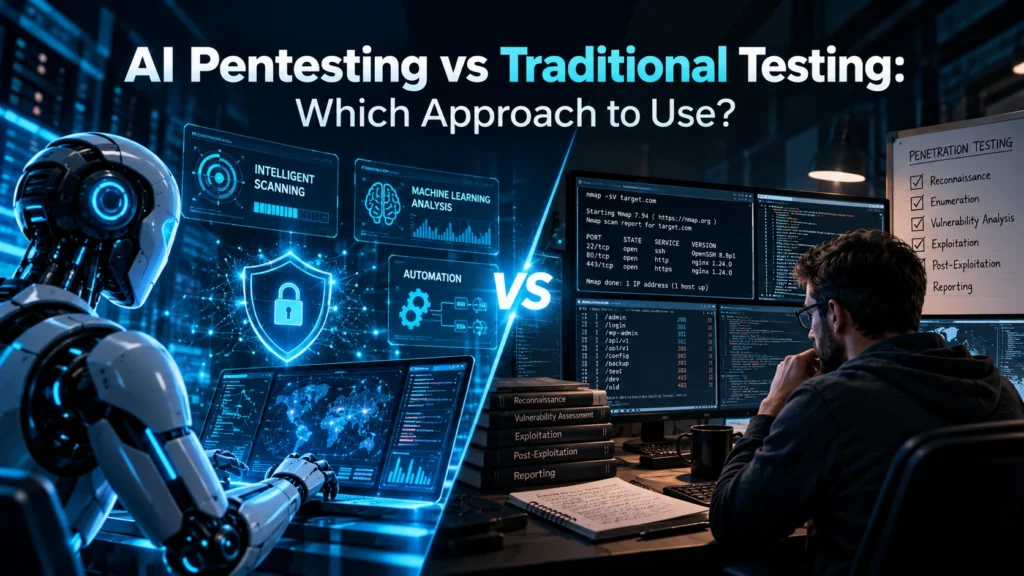
As cyber threats become more sophisticated and technology environments grow more complex, organizations need faster and more effective ways to
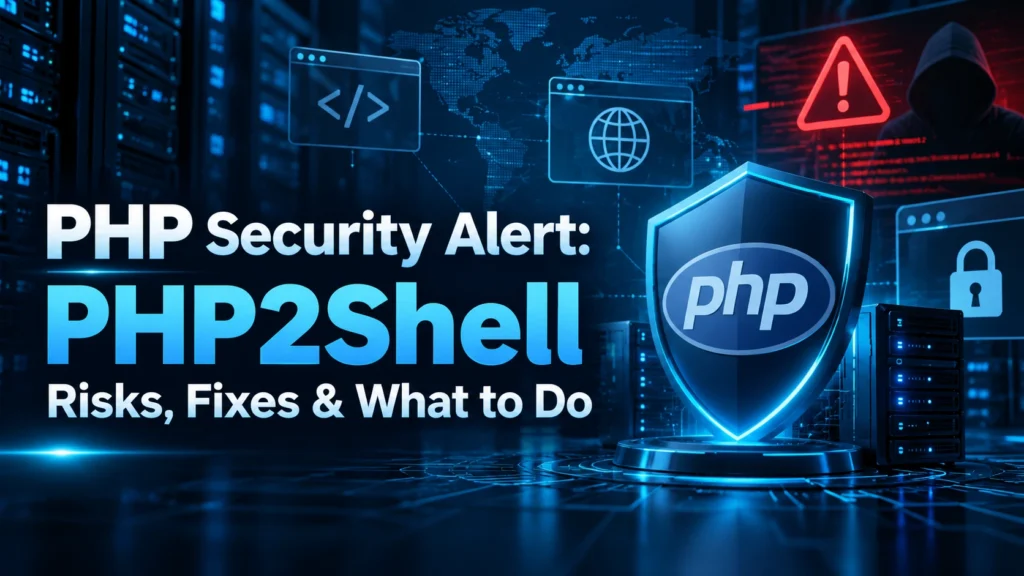
A new PHP Security Alert deserves attention from anyone responsible for a website, web application, or internet-facing server that runs
Moving workloads, applications, and data to the cloud requires more than simply transferring existing systems to a new environment. Businesses
Some security weaknesses are difficult to understand by looking only at what is visible from the outside. Problems may exist
Certain security threats only become visible when a user logs in, which presents a major issue for security businesses thinking
Security testing approaches may change based on how much information the tester receives before beginning the test. Black Box Penetration
Share a few details about your needs, and we’ll connect you with the right specialist who can guide you on the next steps within one business day.