Cloud applications are changing how enterprises build and manage technology. Instead of maintaining every server, operating system, and infrastructure component, businesses can use cloud services that handle much of the operational work. Cloud Serverless for Enterprise allows organizations to run applications and workloads without directly managing servers.
With serverless platforms, businesses can deploy code, automate processes, and scale resources based on demand while the cloud provider manages the underlying infrastructure. However, choosing the right serverless approach requires more than selecting a cloud provider. Enterprises need to evaluate workload requirements, security controls, integration needs, governance, and cost management before adopting a serverless model.
What Is Cloud Serverless for Enterprise?
Cloud Serverless for Enterprise is a cloud computing model where businesses run applications without managing traditional server infrastructure. Instead of provisioning and maintaining servers, enterprises use managed cloud services that handle infrastructure operations, resource allocation, and scaling.
Serverless does not mean there are no servers involved. The servers still exist, but the cloud provider manages them. This allows development and IT teams to focus on applications, business workflows, and cloud workloads instead of routine infrastructure management.
Enterprises commonly use serverless architecture for:
- APIs and backend services
- Data processing tasks
- Automated workflows
- Application integrations
- Event-driven applications
A common serverless model is Function as a Service (FaaS). FaaS allows businesses to run specific functions when needed without maintaining a dedicated execution environment. These functions can respond to events such as customer requests, database updates, or file uploads.
How Does Enterprise Serverless Computing Work?
Enterprise serverless computing works by running application functions when specific events occur. Instead of keeping applications active on dedicated resources, serverless services execute workloads when they are required.
A typical serverless workflow includes an event trigger, a function execution, and a response. For example, a file upload may trigger a function that processes the file, updates a database, or starts an automated business workflow.
Event-driven execution
Serverless platforms are commonly built around event-driven architecture. A function starts when a specific event occurs.
Common event triggers include:
- API requests from applications
- Database changes
- File uploads
- User actions
- Scheduled tasks
- Automated workflows
Managed Serverless Functions
Serverless functions are small units of code designed to perform specific tasks. They run inside a cloud-managed execution environment provided by a serverless platform.
With enterprise serverless functions as a service, businesses can deploy functions without managing servers, runtime environments, or backend infrastructure.
Common enterprise use cases include:
- Processing business data
- Automating repetitive tasks
- Connecting applications
- Running backend services
- Supporting application features
Automatic Scaling & Resource Management
One reason enterprises consider serverless computing is automatic scaling. Serverless platforms can adjust resources based on workload demand.
For example, an application may receive a small number of requests during normal operations and a much higher volume during peak periods. Serverless services can allocate resources based on usage without requiring manual infrastructure changes. This reduces some aspects of infrastructure management and allows teams to focus on application deployment, performance, and business requirements.
Why Are Enterprises Moving Toward Serverless Cloud Platforms?
Enterprises are adopting serverless cloud platforms because they need flexible ways to develop applications and manage workloads without handling every infrastructure task internally.
Serverless can support faster application development by allowing developers to focus on application code while cloud providers manage servers, scaling, and execution environments.
Common reasons businesses consider serverless include:
- Reducing infrastructure management tasks
- Supporting faster application deployment
- Managing unpredictable workloads
- Improving developer workflow
- Building cloud-native applications
What Should Enterprises Look for in a Serverless Cloud Service?
Choosing the best cloud serverless service for an enterprise depends on more than the available features. Enterprises need to consider how a platform fits their applications, security requirements, development processes, and long-term technology plans.
A suitable serverless platform should support business workloads while providing control over security, performance, integrations, and costs.
Scalability & Performance
Enterprise applications often need to handle changing workloads, seasonal demand, or global users. A serverless platform should support enterprise scalability by adjusting resources based on application requirements.
Important factors include:
- Workload performance during high-demand periods
- Response time for critical applications
- Support for global deployment
- Low-latency computing requirements
- Ability to handle changing traffic patterns
Security & Enterprise Governance
Security is a major consideration when adopting serverless solutions. Enterprises need visibility into how applications, functions, and data are protected.
Important security areas include:
- Identity management
- Access control
- Permission management
- Data protection
- Security policies
- Compliance requirements
Integration With Existing Systems
Most enterprises already have existing applications, databases, and infrastructure. A serverless platform should work with these environments instead of requiring a complete technology replacement.
Important integration capabilities include:
- APIs for connecting applications
- Support for containers
- Hybrid cloud compatibility
- Database integration
- Connection with existing enterprise applications
Pricing & Cost Management
Serverless platforms usually follow a usage-based pricing model. Businesses pay based on factors such as function executions, processing time, and resource consumption.
Before selecting a platform, enterprises should review:
- Pay-as-you-go pricing models
- Execution costs
- Resource usage patterns
- Cost estimation methods
- Cloud cost optimization options
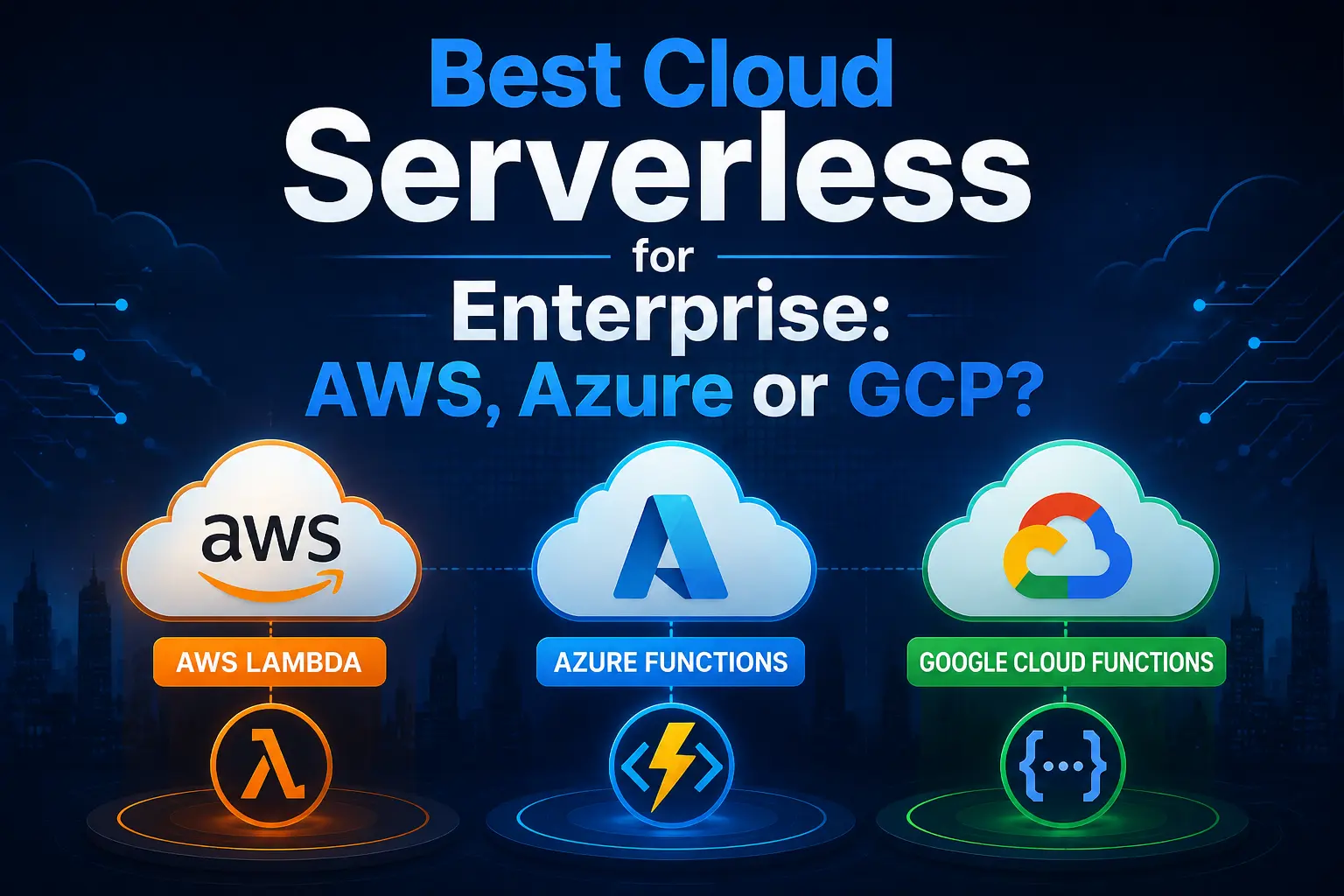
Best Cloud Serverless Services for Enterprise
There is no single serverless platform that is best for every enterprise. The right choice depends on application requirements, existing cloud infrastructure, security needs, and development preferences.
The major cloud providers offer serverless services with different strengths.
Platform | Best For |
AWS Lambda | Enterprise workloads, large cloud ecosystems, and event-driven applications |
| Azure Functions | Organizations using Microsoft technologies and enterprise applications |
| Google Cloud Functions | Cloud-native applications and Google Cloud environments |
AWS Lambda
AWS Lambda is a serverless computing service from Amazon Web Services that allows businesses to run code in response to events without managing servers. AWS Lambda is commonly used by organizations already operating within the AWS ecosystem.
Common enterprise use cases include:
- API backends
- Data processing
- Automation workflows
- Application integrations
Azure Functions
Azure Functions is Microsoft’s serverless computing service designed for event-driven applications. It is often considered by organizations that already use Microsoft technologies such as Azure, Microsoft 365, or other enterprise Microsoft services.
Common use cases include:
- Business process automation
- Application integrations
- API development
- Data processing
Google Cloud Functions
Google Cloud Functions provides serverless execution for applications running within Google Cloud. It supports cloud-native development and is commonly used for:
- Event-driven applications
- Backend services
- Data processing workflows
- Cloud integrations
When comparing top serverless providers for enterprise scale, businesses should evaluate their current cloud environment, application requirements, security needs, and operational goals instead of selecting a platform based only on popularity.
Serverless Functions as a Service (FaaS) for Enterprise Applications
Enterprise serverless functions as a service allows organizations to run application functions without managing servers or runtime infrastructure. FaaS platforms execute code when triggered by an event and automatically manage the required resources.
FaaS is commonly used for specific workloads where businesses need flexible execution, automation, and scalable application components.
API-based Applications
Serverless functions are often used to support API endpoints and backend services.
Examples include:
- Processing user requests
- Connecting different applications
- Supporting microservices
- Running application logic
Instead of maintaining dedicated backend servers, businesses can use serverless functions to execute specific application tasks when needed.
Data Processing Workloads
Enterprises often use serverless functions for automated data processing.
Common examples include:
- Processing uploaded files
- Transforming data
- Running analytics workflows
- Automating data-related tasks
This approach allows businesses to process information when events occur without maintaining continuously running resources.
Event-based Business Applications
Serverless platforms work well with event-driven architecture where applications respond to specific business activities.
Examples include:
- Automated notifications
- Workflow automation
- Real-time data processing
- System integrations
For enterprises, FaaS provides a way to build flexible application components while reducing the amount of infrastructure management required.
Cloud Serverless vs Traditional Cloud Infrastructure
Enterprises usually choose between different cloud approaches based on their workload requirements, level of control, and operational needs. Serverless and traditional cloud infrastructure solve different problems, so the right option depends on the type of application and business requirements.
Serverless Infrastructure
In a serverless model, the cloud provider manages the underlying servers, operating systems, and infrastructure resources. Businesses deploy application code or functions, and the platform handles execution, scaling, and resource allocation.
Key characteristics include the following:
- Managed infrastructure
- Automatic scaling based on workload demand
- Usage-based pricing
- Reduced server maintenance
- Focus on application development
Traditional Cloud Infrastructure
Traditional cloud infrastructure gives businesses more direct control over cloud resources. Organizations typically manage virtual machines, operating systems, applications, and infrastructure configurations.
Key characteristics include the following:
- Greater infrastructure control
- Manual resource management
- Fixed capacity planning
- More responsibility for maintenance and configuration
Choosing Between Serverless & Traditional Cloud
The decision depends on the workload, technical requirements, and operational goals.
Serverless may be suitable when a business needs the following:
- Flexible scaling
- Faster application deployment
- Reduced infrastructure management
Traditional cloud infrastructure may be more suitable when a business requires the following:
- Customized infrastructure configurations
- Long-running workloads
- More control over cloud resources
Many enterprises use a combination of approaches, including virtual machines, containers, and serverless services, depending on the application requirements.
Challenges of Using Serverless in Enterprise Environments
While serverless provides flexibility, enterprises should evaluate potential challenges before adopting a serverless architecture. Understanding these areas helps businesses create a practical serverless strategy.
Vendor Dependency
Serverless applications often rely on specific cloud provider services. Moving applications between providers may require changes to code, configurations, or integrations. This can create cloud vendor lock-in when applications become closely connected to a specific platform.
Enterprises should consider:
- Platform dependency
- Application portability
- Long-term cloud strategy
- Provider capabilities
Monitoring & Debugging
Serverless applications can involve multiple functions, APIs, and cloud services. Tracking application behavior may require proper monitoring and logging practices.
Important areas include:
- Application monitoring
- Function performance tracking
- Error logging
- Troubleshooting processes
Security Management
Serverless changes how security is managed because businesses are responsible for securing application code, permissions, and configurations.
Important security areas include:
- Function security
- Access management
- User permissions
- Data protection
- Secure configuration
Cost Control
Serverless pricing is based on usage, which can make costs flexible but also requires monitoring.
Unexpected expenses may occur when:
- Functions are triggered more frequently than expected
- Applications are poorly optimized
- Workloads are not monitored properly
How to Choose the Right Serverless Platform for Your Enterprise
Choosing the right platform requires evaluating business requirements, existing technology, security needs, and plans. The best cloud serverless service for enterprise depends on how well the platform matches the organization’s workload and operational requirements.
Evaluate Your Existing Cloud Environment
Many businesses already use cloud platforms such as AWS, Azure, or Google Cloud. Existing infrastructure can influence which serverless platform fits best.
Consider:
- Current cloud provider
- Existing applications
- Available technical skills
- Integration requirements
- Hybrid cloud needs
For example, an organization already using Microsoft Azure may prefer Azure Functions because it integrates with existing Microsoft services and workflows.
Review Application Requirements
Different applications have different technical needs. Before selecting a serverless platform, businesses should review:
- Workload type
- Performance requirements
- Scalability needs
- Application architecture
- Integration requirements
Applications built around APIs, automation, and event-driven workflows may benefit from serverless approaches, while other workloads may require different infrastructure options.
Compare Security & Compliance Needs
Enterprise applications often have specific security and compliance requirements. Businesses should review how each platform supports:
- Governance policies
- Access controls
- Identity management
- Security monitoring
- Compliance requirements
Security decisions should be part of the platform selection process from the beginning.
Analyze Pricing Models
Serverless platforms typically use usage-based pricing. Enterprises should understand how costs are calculated before moving workloads.
Review:
- Usage-based pricing
- Function execution costs
- Resource consumption
- Cost estimation methods
- Monitoring options
A clear understanding of pricing helps businesses avoid unexpected costs and select a platform that fits their budget.
Common Enterprise Serverless Adoption Mistakes
Serverless can help enterprises build and run applications more efficiently, but adoption requires proper planning. Moving workloads to a serverless platform without reviewing technical requirements can create performance, security, or cost issues.
Moving Unsuitable Workloads
Not every application is a good fit for serverless. Some workloads require long-running processes, specific infrastructure configurations, or direct control over computing resources.
Ignoring Security Configuration
Serverless platforms reduce infrastructure management, but businesses still need to manage application security.
Poor Cost Monitoring
Serverless pricing is based on usage, which requires businesses to monitor workload activity and resource consumption.
Lack of Governance
Enterprise environments need clear rules for managing cloud resources. Without proper cloud governance, organizations may face inconsistent configurations, security gaps, or difficulty managing multiple applications.
Not Planning Integration
Many enterprises already have existing applications, databases, and infrastructure. A serverless solution needs to work with these systems.
Is Serverless the Right Choice for Enterprise Workloads?
Serverless can be a suitable option for many enterprise workloads, but it depends on the application requirements and business goals.
Serverless works well for:
- API-based applications
- Automation tasks
- Event-driven applications
- Variable workloads
- Data processing workflows
However, serverless may not be the right choice for every workload. Applications that require long-running processes, highly customized infrastructure, or complete control over computing resources may need a different approach.
How CyberZeals Helps Businesses Adopt Cloud Serverless Solutions
Adopting serverless requires planning around application requirements, cloud infrastructure, security, and long-term management. CyberZeals helps businesses evaluate and improve their cloud environments through services focused on cloud strategy and technology planning.
Our support can include:
- Serverless architecture consulting
- Cloud consulting Services in USA
- Cloud migration support Services in USA
- Cloud security assessment Services in USA
- Infrastructure planning
- Application modernization
CyberZeals helps businesses review their current technology environment, identify suitable cloud approaches, and plan improvements based on their operational requirements. Whether an organization is exploring serverless adoption or improving an existing cloud environment, the right approach starts with understanding the workload, security requirements, and business objectives.
Frequently Asked Questions
What is cloud serverless for enterprises?
Cloud serverless for enterprise allows businesses to run applications without managing servers. Cloud providers handle infrastructure, scaling, and resource management while businesses focus on application development.
Which cloud serverless service is best for enterprises?
The best serverless service depends on the workload, existing cloud environment, security requirements, and business needs. AWS Lambda, Azure Functions, and Google Cloud Functions are common enterprise options.
Is serverless suitable for enterprise applications?
Yes, serverless can support enterprise applications such as APIs, automation workflows, data processing, and event-driven applications. The suitability depends on the workload requirements.
What are enterprise serverless functions as a service?
Enterprise serverless functions as a service (FaaS) allows businesses to run application functions without managing servers or runtime environments. The cloud provider manages the infrastructure needed to execute the functions.
How does serverless reduce cloud costs?
Serverless uses usage-based pricing, meaning businesses typically pay for the resources used during function execution instead of maintaining continuously running infrastructure.
What are the main serverless cloud providers?
The main serverless cloud providers include AWS Lambda from Amazon Web Services, Azure Functions from Microsoft Azure, and Google Cloud Functions from Google Cloud.