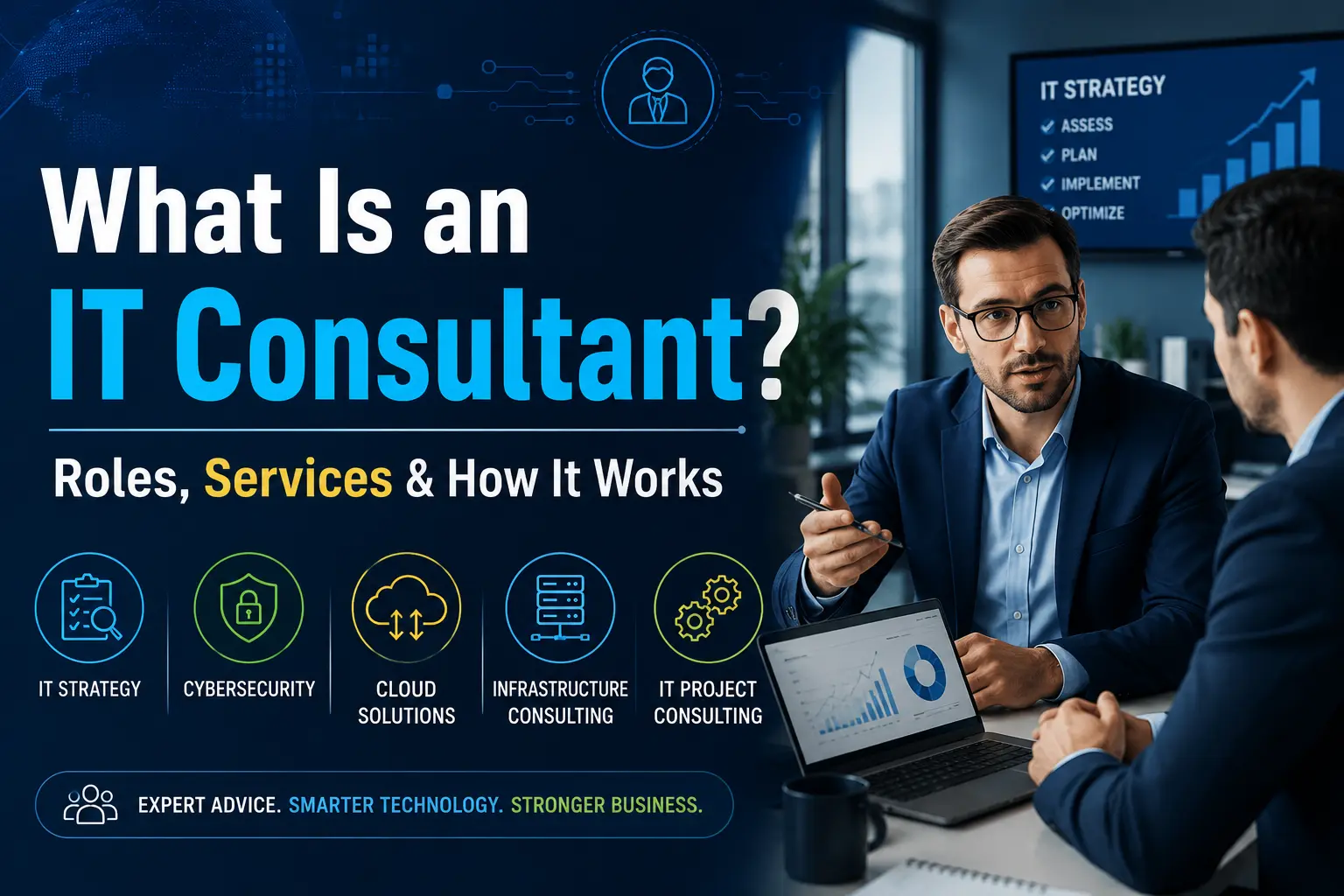
An IT consultant is a technology professional who helps businesses assess their IT environment, solve technology problems, and make informed decisions about systems, security, infrastructure, and software. If you are asking what is an IT consultant, the simplest answer is that an IT consultant provides expert guidance when a business needs technology advice, planning, or support for a specific project.
An IT consultant can work with a small business, a growing company, or an enterprise organization. The work may involve reviewing existing systems, identifying risks, recommending solutions, planning technology projects, improving cybersecurity, or helping an internal IT team handle a complex requirement.

What Is IT Consulting?
IT consulting is the professional service of providing technology advice, assessment, planning, and implementation support to organizations. It can cover a single project or continue as an advisory relationship, depending on what the business needs.
Information technology consulting can help a company make decisions about infrastructure, cybersecurity, cloud systems, software, networks, data, and other technology. The consultant connects those technical decisions to the business requirements instead of recommending technology without understanding the problem first.
What Is an IT Consultant Service?
An IT consulting service helps a business evaluate a technology need and determine what should happen next. The service may include assessment, recommendations, planning, implementation support, or ongoing advisory work.
Common IT consulting services include:
IT Strategy Consulting
IT strategy consulting helps businesses plan how technology should support their current operations and future requirements. An IT consultant may review existing systems, identify gaps, prioritize improvements, and create an IT roadmap.
Cybersecurity Consulting
Cybersecurity consulting services focus on identifying and addressing security risks. Depending on the engagement, an IT consultant may review access controls, endpoints, networks, cloud systems, vulnerabilities, security policies, or incident response processes.
Cloud Consulting
Cloud consulting services help businesses evaluate, migrate, manage, or improve cloud environments. The work can include cloud architecture, migration planning, security reviews, cost considerations, and integration with existing systems.
Infrastructure and Network Consulting
Infrastructure consulting covers technology such as servers, networks, storage, connectivity, and related systems. A consultant may review performance, identify outdated components, and recommend changes based on business requirements.
IT Project Consulting
IT project consulting provides specialized support for technology projects such as system upgrades, migrations, deployments, integrations, and infrastructure changes. The consultant can help define requirements, plan the project, coordinate technical work, and review the final result.
Technology and Vendor Consulting
Businesses often need help comparing technology products or vendors. A consultant can define requirements, evaluate available options, review technical differences, and help the business make a decision based on its needs.
What Are an IT Consultant’s Roles and Responsibilities?
IT consultant roles and responsibilities can include technical assessment, planning, project support, risk management, vendor coordination, and technology strategy. The exact duties depend on the consultant’s area of expertise and the needs of the business.
For example, an information technology consultant working on a cloud project may assess the current infrastructure, review cloud options, create a migration plan, and support implementation. A cybersecurity consultant may instead focus on vulnerabilities, access controls, security policies, and incident response planning.
How Does IT Consulting Work?
How IT consulting works depends on the project, but most engagements start by understanding the business problem and current technology environment. The consultant then assesses the situation, identifies gaps, recommends practical solutions, and supports the next stage if implementation is part of the agreement.
The process should be based on the actual environment. A consultant should understand the systems already in use, the people who rely on them, existing constraints, security requirements, and the outcome the business needs.
Understand the Business and Current IT Environment
The consultant starts by understanding how the business operates and how technology supports that operation. This can include reviewing users, applications, infrastructure, cloud services, security controls, existing problems, and business requirements. This step prevents the consultant from recommending a solution before understanding the reason behind the technology problem.
Assess Systems, Infrastructure, and Security
The consultant reviews the relevant technology environment. Depending on the project, this may include networks, endpoints, servers, cloud platforms, applications, access controls, backups, and security tools. The assessment helps establish what is working, what needs attention, and where technical or security gaps may exist.
Identify Problems, Risks, and Gaps
After reviewing the environment, the consultant identifies issues that may affect the business. These could include outdated systems, excessive access permissions, weak security controls, poor system performance, unsupported technology, unnecessary software, or gaps in the current IT strategy.
Recommend Technology Solutions
The consultant then recommends solutions that address the identified requirements. A recommendation may involve changing an existing system, implementing a new technology, improving a security control, moving workloads to the cloud, or changing an IT process. The recommendation should explain what needs to change and why.
Build an IT Roadmap
For larger projects, the consultant can create an IT roadmap that organizes technology improvements by priority. The roadmap may identify immediate issues, planned projects, dependencies, required resources, and longer-term improvements. This gives the business a clearer sequence for making technology changes.
Support Implementation
Some consultants provide implementation support after the planning stage. This can include coordinating technical teams, working with vendors, reviewing configurations, testing systems, or helping with migration activities. The exact implementation role should be defined in the project scope.
Review and Improve the Environment
After implementation, the consultant can review whether the solution meets the original requirements and whether additional issues remain. This may involve testing, documentation, security reviews, performance checks, or recommendations for the next phase of work.
What Problems Can an IT Consultant Solve?
An IT consultant can help businesses address technology problems that require specialized knowledge, independent assessment, or structured planning.
Common examples include:
- Outdated IT infrastructure
- Cybersecurity weaknesses
- Cloud migration problems
- Poor network performance
- Complex technology projects
- Unclear IT strategy
- Difficult technology purchasing decisions
- Vendor selection problems
- Compliance-related technology requirements
- High or poorly understood IT costs
- Lack of specialized internal IT expertise
The consultant does not automatically need to replace existing technology. In many cases, the goal is to understand the current environment and determine what needs to change.
When Should a Business Hire an IT Consultant?
A business may need an IT consultant when it faces a technology decision or project that requires expertise it does not currently have.
Before a Major Technology Project
A consultant can assess requirements before a business commits to a major migration, upgrade, implementation, or infrastructure change. Early planning can help identify technical dependencies and requirements before implementation begins.
When Existing IT Problems Keep Repeating
Recurring network issues, system failures, security problems, or performance complaints may indicate a larger underlying issue. An independent IT assessment can help identify the cause and determine what needs to be changed.
When Internal IT Lacks Specialized Expertise
An internal IT team may handle daily operations effectively but still need outside expertise for a specialized project. An IT consultant can provide that expertise for a defined period without requiring the business to build a permanent specialist role.
During Cloud Migration or Infrastructure Changes
Moving systems to the cloud or changing infrastructure can affect applications, users, security, data, and business operations. A consultant can help assess requirements, plan the change, identify risks, and coordinate the technical work.
When Cybersecurity Risks Need an Independent Review
An external assessment can provide another view of the organization’s security environment. The review may focus on access controls, endpoint security, vulnerabilities, cloud configuration, network security, or incident response.
When the Business Needs an IT Roadmap
A business may have several technology problems but no clear order for addressing them. An IT consultant can assess the current environment and help organize improvements according to business requirements, risk, cost, and project dependencies.
What Does an IT Consultant Do for Small Businesses?
A business IT consultant can help a small business with technology planning, cybersecurity, cloud decisions, infrastructure, software selection, or specific IT projects. Small businesses may have employees who handle everyday IT issues but lack specialized experience in areas such as cloud architecture, security assessments, network redesign, or major technology migrations.
An IT consultant can provide expertise for those specific needs. The consultant can also help a small business avoid making technology decisions based only on price or convenience. The focus should be on whether the solution fits the company’s users, systems, security requirements, budget, and expected growth.
What Does an IT Consultant Do for Enterprise Organizations?
An enterprise IT consultant may work with larger and more complex technology environments. Enterprise projects can involve multiple locations, large user groups, cloud platforms, business applications, security controls, vendors, and internal technology teams.
An enterprise consultant may support:
- Complex infrastructure planning
- Cloud architecture
- Security strategy
- Technology projects
- Vendor management
- IT governance
- System integration
- Technology assessments
The consultant’s role is usually defined by the project or business requirement rather than by company size alone.
IT Consultant vs. IT Support: What’s the Difference?
An IT consultant and an IT support provider can both work with business technology, but their primary responsibilities are different.
IT consultant | IT support |
Provides technology advice and planning | Handles ongoing technical issues |
Focuses on projects and technology decisions | Focuses on day-to-day IT operations |
| Assesses systems and recommends improvements | Maintains and troubleshoots systems |
| Often works on defined projects | Usually provides recurring support |
| May create an IT roadmap | Usually follows an established IT environment |
The two services can work together. A business may use IT support for daily operations and bring in an IT consultant when it needs specialized expertise or wants to plan a major change.
IT Consultant vs. Managed Service Provider
An IT consultant and a managed service provider (MSP) can serve different roles. An IT consultant usually focuses on assessment, strategy, planning, specialized advice, and technology projects. An MSP usually provides ongoing IT management, monitoring, maintenance, support, and other recurring services.
A business may use one or both. For example, an IT consultant could help plan a cloud migration while an MSP manages the environment after implementation. The right arrangement depends on the company’s internal IT capabilities, project requirements, and need for ongoing support.
See More: Managed Service Provider (MSP) vs. In-House IT Team: Which Is Right for Your Business?
What Does an IT Consultant Do During a Technology Project?
During a technology project, an IT consultant can help move the project from an initial business requirement to a working solution.
Define Project Requirements
The consultant works with stakeholders to understand what the project needs to achieve, which systems are involved, and what limitations must be considered.
Evaluate Technology Options
Available technologies are compared against the project’s technical and business requirements. This can include functionality, integration, security, scalability, and operational considerations.
Plan the Implementation
The consultant helps establish the implementation approach, project stages, dependencies, responsibilities, and technical requirements.
Coordinate Vendors and Teams
Technology projects often involve internal employees, vendors, software providers, and technical specialists. The consultant may help coordinate these groups and keep technical requirements clear.
Manage Technical Risks
Potential issues are identified before or during implementation. These may include compatibility problems, security gaps, data migration issues, system downtime, or integration failures.
Test the Solution
Testing helps determine whether the implemented technology works as expected and meets the agreed requirements.
Document and Handover
The final stage can include documenting configurations, processes, technical decisions, and other information the business needs to maintain the environment.
How Much Does an IT Consultant Cost?
There is no single price for IT consulting. The cost depends on the scope and complexity of the work.
Factors that can affect cost include:
- Project scope
- Number of systems involved
- Number of users or locations
- Technical complexity
- Required expertise
- Project duration
- Implementation requirements
- Level of ongoing support
Common IT Consulting Pricing Models
Hourly consulting: The business pays for the consultant’s time based on an agreed hourly rate.
Fixed project pricing: The consultant provides an agreed scope of work for a defined project price.
Retainer: The business pays for an agreed amount of consulting availability or work during a set period.
Ongoing advisory: The consultant provides continuing technology guidance under an ongoing agreement. Before agreeing to a price, businesses should understand what is included, what the deliverables are, and what work would be treated as additional scope.
How to Choose the Right IT Consultant
Choosing an IT consultant should start with the problem the business needs to solve.
Check Relevant Technical Experience
Look for experience related to the systems, technologies, and type of project involved.
Define the Scope and Deliverables
The agreement should explain what the consultant will assess, produce, recommend, or implement.
Review Security Expertise
If the project involves sensitive information or business-critical systems, confirm that the consultant has the relevant cybersecurity knowledge.
Ask About Implementation Support
Some consultants provide recommendations only, while others also support implementation. Confirm which role applies before the project starts.
Understand Communication and Reporting
Establish who receives updates, how findings are documented, and how technical decisions are communicated to business stakeholders.
Review Pricing and Contract Terms
Understand the pricing model, project scope, payment terms, additional work, and responsibilities of both parties.
Ask for Relevant References or Case Studies
Where available, review examples of similar projects. The most useful references are those that relate closely to the type of problem your business needs to solve.
Can an IT Consultant Work With an Existing IT Team?
Yes. An IT consultant can work alongside an internal IT team without replacing it. An internal team may manage everyday systems while the consultant provides specialized knowledge for a cloud migration, cybersecurity assessment, infrastructure project, technology strategy, or other defined requirement.
Clear responsibilities are important. The business should establish who makes decisions, who implements changes, who manages vendors, and who owns the final documentation.
How CyberZeals Provides IT Consulting Services
CyberZeals provides IT consulting services in the USA to help businesses assess technology requirements, identify risks, and plan practical improvements. Depending on the business need, support can include IT assessments, cybersecurity consulting, cloud support, technology planning, risk assessment, infrastructure guidance, and security assessments.
The specific scope should be based on the organization’s current environment and the problem it needs to solve. For businesses that also need ongoing technical management, IT consulting can be combined with managed IT support.
Frequently Asked Questions
What Is the Role of an IT Consultant?
An IT consultant helps businesses solve technology problems, improve systems, and plan IT projects. They may also advise on cybersecurity, cloud services, networks, and software.
What Does an IT Consultant Get Paid?
IT consultant pay depends on experience, skills, location, and type of work. Some charge by the hour, while others use fixed project fees or ongoing contracts.
Is IT Hard to Be an IT Consultant?
It can be challenging because an IT consultant needs strong technical skills and good communication. They also need to understand business problems and explain technical solutions clearly.
Is IT Consulting Being Replaced by AI?
No. AI can handle some routine IT tasks, but businesses still need consultants for planning, problem-solving, risk assessment, and technology decisions.