Businesses often discover IT problems after they have already affected employees or customers. A slow application, failed connection, or unavailable system can interrupt daily operations before an IT team has enough information to respond. Proactive network monitoring helps businesses identify potential issues earlier by continuously checking network activity and system performance.
Traditional reactive IT support focuses on fixing issues after they happen, while proactive monitoring focuses on prevention and early detection. With real-time network monitoring, businesses can track system health, receive automated alerts, and respond to performance or security concerns before they create larger disruptions. Many organizations use this approach as part of managed IT services to maintain better visibility across their technology environment.
What Is Proactive Network Monitoring?
Proactive network monitoring is the continuous process of checking a company’s network infrastructure, network devices, and IT systems to identify performance issues, failures, and unusual activity before they impact operations. Unlike troubleshooting after a system failure, monitoring collects data about device health, availability, traffic patterns, and performance. IT teams can review this information and respond when problems begin to develop.
Network monitoring for businesses commonly includes tracking routers, switches, servers, endpoints, applications, and cloud resources. Through continuous performance tracking, companies can understand how their systems are working and where improvements may be needed.
How Does Proactive Network Monitoring Work?
A monitoring solution collects information from different parts of an IT environment and analyzes that data to identify potential issues. When a system detects unusual behavior or performance changes, it sends alerts to IT teams.
Continuous Network Performance Monitoring
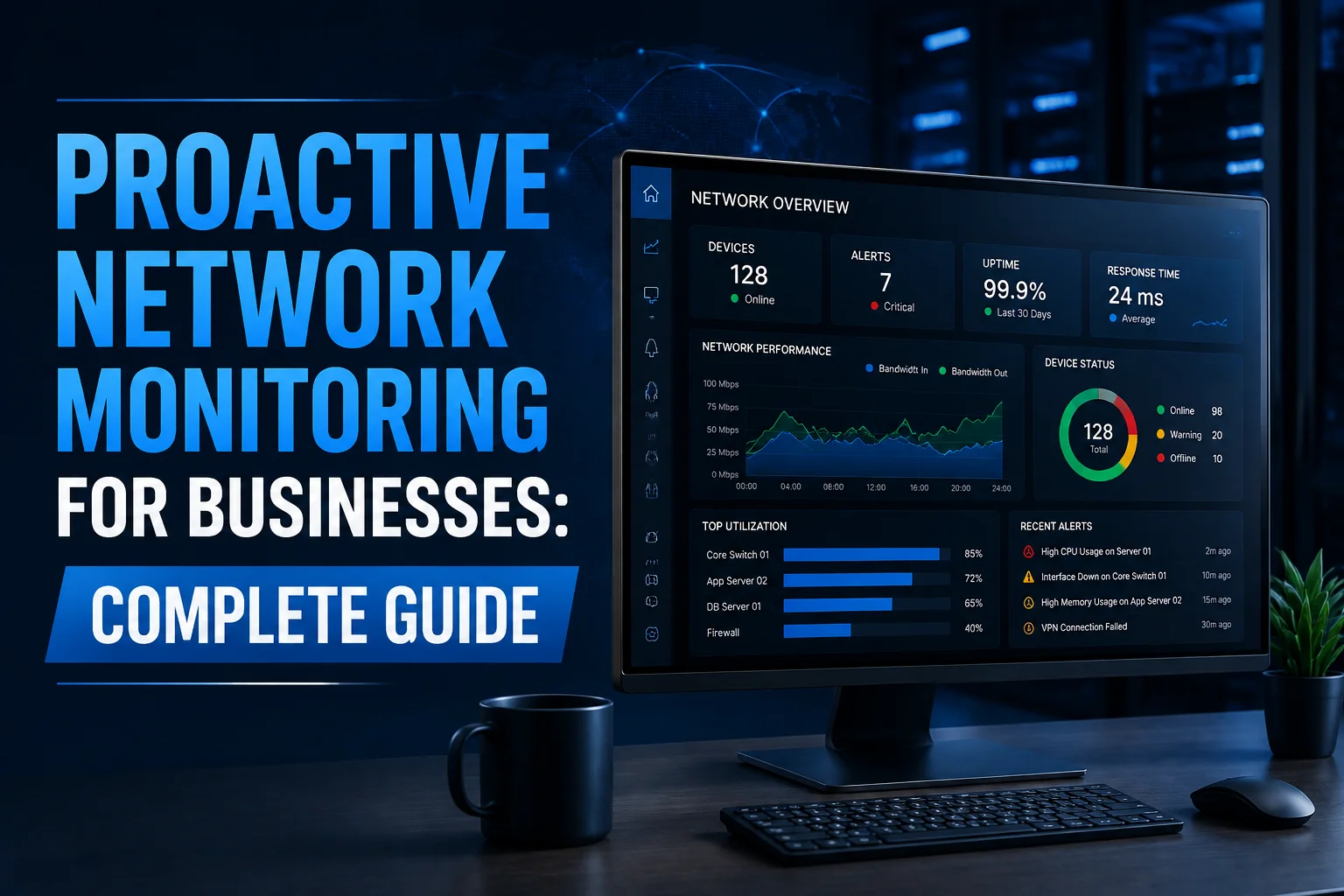
Continuous monitoring checks important network performance metrics such as bandwidth usage, device availability, traffic patterns, and system response times.
For example, monitoring can identify when a server is using unusually high resources, when a router becomes unstable, or when network traffic increases beyond normal levels.
This visibility helps businesses understand the condition of their routers, switches, servers, and endpoints without waiting for users to report problems.
Automated Alerts and Issue Detection
Modern monitoring platforms use real-time alerts to notify IT teams about potential problems.
These alerts can identify issues such as:
- Device failures
- High resource usage
- Network outages
- Unusual activity
- Connectivity problems
Early incident detection allows IT teams to investigate problems before they create larger disruptions.
Remote Monitoring and Management (RMM)
Remote Monitoring and Management Services (RMM) allows IT teams and managed service providers to monitor and manage systems remotely. RMM platforms provide remote management, device monitoring, automated maintenance, and remote troubleshooting.
This helps businesses maintain their systems without requiring physical access to every location. Many MSPs use RMM tools to provide ongoing remote IT support and maintain visibility across customer environments.
Why Businesses Need Proactive Network Monitoring
Businesses depend on reliable technology for communication, applications, cloud management services, and daily operations. A small network issue can affect productivity if it remains unnoticed. Proactive IT support helps organizations identify problems earlier and maintain more predictable IT operations.
Reduce Unexpected Downtime
Network failures often start with smaller warning signs such as unusual traffic, declining device performance, or increasing resource usage.
By monitoring these changes, IT teams can respond before users experience major interruptions. This helps improve business continuity and reduces the impact of unexpected downtime.
Improve Network Performance
Monitoring helps businesses identify performance problems such as slow applications, network bottlenecks, and overloaded systems. The collected data allows IT teams to optimize resources, improve configurations, and maintain better application reliability.
Strengthen IT Security
Cybersecurity monitoring provides additional visibility into network activity and helps identify suspicious behavior.
Monitoring can support security teams by detecting:
- Unusual access attempts
- Abnormal network traffic
- Security events
- Potential threats
While monitoring does not replace dedicated security solutions, it supports faster investigation and response.
Reduce IT Support Costs
Reactive fixes often require urgent troubleshooting and can interrupt business operations. With proactive monitoring, businesses can identify recurring issues earlier, plan maintenance, and reduce emergency repairs. This improves IT efficiency and helps companies manage technology costs more effectively.
Proactive Network Monitoring vs Reactive IT Support
Proactive Monitoring | Reactive Support |
Finds issues before failure | Responds after failure |
Uses continuous monitoring | Depends on user reports |
| Provides automated alerts | Focuses on emergency fixes |
| Supports preventive maintenance | Handles problems after impact |
| Creates predictable IT management | Can lead to unexpected downtime |
Proactive monitoring focuses on prevention and visibility, while reactive support focuses on restoring systems after a problem occurs. Many businesses combine both approaches through managed IT services to maintain reliable systems and receive support when incidents happen.
What Should Businesses Look for in a Network Monitoring Solution?
A suitable monitoring solution should match the company’s infrastructure, security requirements, and business needs.
Real-Time Monitoring Capabilities
A strong solution should provide 24/7 monitoring, performance tracking, and automated notifications. Continuous visibility allows IT teams to understand system health and respond quickly when issues appear.
Support for Different IT Environments
Modern businesses often use a mix of cloud platforms, local systems, and hybrid setups.
A monitoring solution should support:
- Cloud monitoring
- On-premise infrastructure
- Hybrid infrastructure
- Enterprise networks
This allows businesses to monitor different environments from one platform.
Security Monitoring Features
Security features help organizations track suspicious activity and potential risks. Important capabilities include access monitoring, threat detection support, and visibility into security events.
Reporting and Analytics
Reports help businesses review system performance over time. Monitoring platforms can provide historical trends, performance reports, and issue analysis to help teams make better IT decisions.
Common Network Problems Proactive Monitoring Helps Identify
Slow Network Performance
Slow performance can happen because of bandwidth limitations, high traffic, outdated hardware, or configuration problems. Monitoring helps identify where performance issues are occurring.
Hardware Failures
Network devices such as servers, switches, and routers can develop problems over time. Monitoring tools track device health and alert IT teams when performance starts declining.
Bandwidth Issues
High bandwidth usage can affect applications and employee productivity. Monitoring helps identify traffic patterns and devices consuming excessive resources.
Configuration Errors
Incorrect configurations can affect connectivity and system performance. Monitoring helps detect unusual changes and possible configuration-related issues.
Security Events
Unusual activity patterns can indicate possible security concerns. Monitoring provides visibility that helps IT teams investigate suspicious events.
Device Connectivity Problems
Disconnected devices can interrupt workflows. Monitoring tools identify unavailable devices and connectivity failures quickly.
How Proactive Network Monitoring Supports Remote and Distributed Teams
Remote work and multi-location operations require businesses to maintain visibility across different environments.
Proactive network monitoring helps IT teams monitor the following:
- Remote offices
- Branch locations
- Employee devices
- Cloud applications
- Distributed infrastructure
For businesses with a distributed workforce, monitoring provides a centralized view of system performance without requiring teams to be physically present at every location.
Proactive Network Monitoring for Small and Medium Businesses
Small and medium businesses often rely on technology but may not have large internal IT teams. Network monitoring for small businesses helps organizations maintain system reliability, improve security visibility, and reduce unexpected IT problems.
Through small business IT support and managed services, companies can access monitoring tools and technical expertise without building a large internal department.
How Managed Service Providers Use Proactive Network Monitoring
Managed service providers use managed network monitoring to provide continuous oversight of business IT environments. MSPs typically use monitoring platforms to track systems, automate maintenance tasks, create support tickets, troubleshoot issues remotely, and provide performance reports. This allows businesses to receive ongoing IT support while their internal teams focus on daily operations.
Network Monitoring Tools Businesses Commonly Use
Businesses use different monitoring tools based on their infrastructure and technical requirements. Infrastructure monitoring tools focus on devices, servers, applications, and network performance. Examples include SolarWinds and Datadog.
Security monitoring tools help analyze logs, detect threats, and track security events. Cloud monitoring tools help businesses monitor cloud resources and applications. Examples include Microsoft Azure Monitor and AWS CloudWatch. The right solution depends on the organization’s environment, size, and monitoring requirements.
How CyberZeals Helps Businesses With Proactive Network Monitoring
CyberZeals helps businesses maintain visibility into their IT environment through proactive maintenance solutions in USA and managed support. Our services include network monitoring, infrastructure monitoring, security monitoring, IT support, and incident response.
CyberZeals helps businesses identify performance issues, monitor critical systems, and respond to IT problems before they create larger disruptions. Through managed IT services, businesses can maintain better control over their technology environment and receive ongoing support for their network operations.
Frequently Asked Questions
What is proactive network monitoring?
Proactive network monitoring continuously checks IT systems to identify performance issues, failures, and security concerns before they affect business operations.
How does proactive monitoring prevent downtime?
It detects early warning signs such as performance problems, hardware issues, and unusual activity so teams can respond before failures occur.
What is the difference between proactive and reactive monitoring?
Proactive monitoring identifies issues before they affect users. Reactive monitoring responds after a problem has already occurred.
Do small businesses need network monitoring?
Yes. Network monitoring helps small businesses improve system reliability, security visibility, and IT management.
What tools are used for proactive network monitoring?
Common tools include SolarWinds, Datadog, Microsoft Azure Monitor, and AWS CloudWatch.
Can an MSP provide proactive network monitoring?
Yes. Many managed service providers include proactive monitoring as part of their managed IT services to monitor systems and support maintenance.