
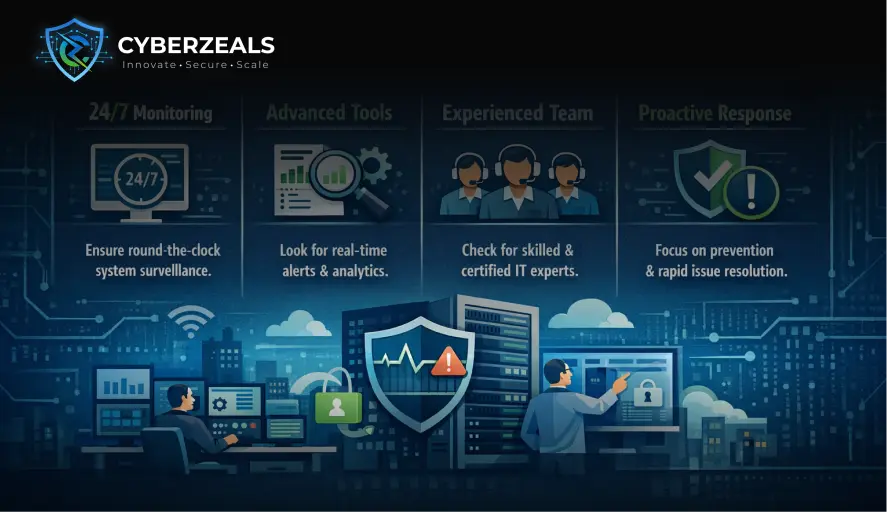
Choosing the right IT partner is one of the most critical decisions for any modern business. With increasing cyber threats, downtime risks, and growing infrastructure complexity, businesses are actively searching for how to choose a managed service provider that can deliver real value-not just basic support.
At its core, the difference between an average provider and a high-performing one lies in proactive monitoring. Instead of reacting to problems, a reliable MSP identifies and resolves issues before they impact your operations.
If you’re wondering how to choose the right MSP for your business, this guide will walk you through everything-from understanding proactive systems to evaluating providers with confidence.
Why Choosing the Right MSP Matters for Your Business
The Cost of Choosing the Wrong MSP
Selecting the wrong provider can lead to serious consequences. Many businesses experience frequent downtime, slow support response, and unresolved technical issues simply because they rushed into choosing an MSP without proper evaluation.
The wrong MSP often operates on a reactive model, fixing issues only after they occur. This results in lost productivity, revenue drops, and frustrated teams. Over time, these hidden costs far outweigh the initial savings.
Reactive vs Proactive IT Support Explained
A key factor in how to choose a managed service provider is understanding the difference between reactive and proactive IT support.
Reactive IT support responds after something breaks. On the other hand, proactive monitoring continuously tracks systems, identifies risks, and prevents failures before they happen.
With proactive network monitoring, businesses gain real-time visibility into their infrastructure, allowing issues to be resolved before they disrupt operations.
How Proactive Monitoring Improves Business Performance
Businesses that invest in proactive IT maintenance experience:
- Reduced downtime
- Improved system performance
- Stronger cybersecurity posture
- Better operational efficiency
Instead of constantly firefighting, proactive systems ensure smooth day-to-day operations. This is why proactive maintenance is no longer optional-it’s essential.
What Is Proactive Monitoring and Why It’s Critical
Understanding Proactive Network Monitoring
Proactive network monitoring involves continuously tracking network performance, identifying anomalies, and triggering alerts before issues escalate.
Modern MSPs use advanced tools to monitor servers, endpoints, and applications in real time. This ensures immediate action whenever something unusual is detected.
For businesses exploring how to choose the right MSP for your business, this capability should be non-negotiable.
Role of Proactive IT Maintenance in Preventing Failures
Proactive IT maintenance focuses on preventing issues rather than fixing them. This includes:
- Regular updates and patch management
- Performance optimization
- Security vulnerability checks
- System health monitoring
By implementing proactive maintenance, businesses avoid unexpected breakdowns and costly downtime.
Key Tools and Technologies Used by MSPs
When evaluating how to choose a managed service provider, look at the tools they use. Leading MSPs rely on:
- Remote Monitoring and Management (RMM) tools
- Automation systems
- AI-driven analytics
- Security monitoring platforms
These tools enable consistent proactive monitoring and ensure high service reliability.
Key Factors to Consider When Choosing an MSP
Service Level Agreements (SLAs) and Response Time
SLAs define how quickly an MSP responds to issues. When learning how to choose the right MSP for your business, always evaluate:
- Guaranteed response times
- Resolution timelines
- Support availability (24/7 or limited hours)
Fast and reliable support is a must.
Security Capabilities and Compliance Readiness
Cybersecurity is a major concern for US businesses. Your MSP should offer:
- Threat detection and prevention
- Security monitoring
- Data protection strategies
A provider that integrates security into proactive monitoring ensures long-term protection.
Scalability and Customization Options
Your business will grow, and your MSP should grow with you. A good provider offers scalable solutions and customized services tailored to your needs.
This flexibility is crucial when choosing an MSP for long-term success.
Transparent Pricing and No Hidden Costs
Pricing should be clear and predictable. Avoid providers that offer vague pricing structures or hidden fees.
Transparency builds trust and ensures a smoother partnership.
Step-by-Step Guide to Choosing the Right MSP for Your Business
Step 1: Define Your IT Needs and Business Goals
Start by identifying your requirements:
- Do you need full IT management or partial support?
- Are you focused on security, performance, or scalability?
Understanding your needs simplifies how to choose a managed service provider.
Step 2: Evaluate MSP Capabilities and Tools
Check whether the provider offers:
- Proactive monitoring
- Proactive network monitoring
- Automation and advanced tools
These capabilities are essential for modern IT environments.
Step 3: Ask the Right Questions Before Signing
Ask questions like:
- How do you handle downtime prevention?
- What tools do you use for proactive IT maintenance?
- How do you ensure security?
These insights help in choosing an MSP confidently.
Step 4: Compare Multiple Providers
Never settle for the first option. Compare multiple MSPs based on:
- Services offered
- Pricing
- Customer reviews
This ensures you select the best fit.
Step 5: Test Support Responsiveness
Before committing, test their support system. A quick response time indicates reliability.
Red Flags to Avoid When Choosing an MSP
Lack of Proactive Monitoring Capabilities
If an MSP does not offer proactive monitoring, it’s a major red flag. Without it, your business will always remain vulnerable to unexpected issues.
Poor Communication and Support Delays
Slow or unclear communication leads to frustration and inefficiency. A reliable MSP maintains clear and consistent communication.
Limited Transparency in Reporting
You should have access to reports and insights. A lack of transparency often indicates poor service quality.
No Long-Term IT Strategy
An MSP should act as a strategic partner, not just a service provider. If they lack long-term planning, it’s best to look elsewhere.
Why CyberZEALS Is the Right MSP for Proactive IT Management
Choosing the right partner becomes easier when you work with experts who understand both technology and business needs.
CyberZEALS offers:
Advanced Proactive Monitoring Systems
CyberZEALS uses cutting-edge tools for proactive monitoring, ensuring issues are identified and resolved before they impact your business.
Proven Expertise in Managed IT Services
With extensive experience, CyberZEALS understands how to choose the right MSP for your business—and delivers solutions that align with your goals.
Tailored Solutions for US-Based Businesses
CyberZEALS provides customized IT solutions designed specifically for US businesses, ensuring compliance, performance, and scalability.
24/7 Support and Continuous Optimization
Round-the-clock support combined with proactive IT maintenance ensures your systems run smoothly at all times.
Final Thoughts
Understanding how to choose a managed service provider is essential for long-term business success. The right MSP doesn’t just fix problems-they prevent them through proactive monitoring, proactive maintenance, and strategic IT planning.
If you’re serious about improving performance, reducing downtime, and securing your infrastructure, investing in the right partner is the smartest move you can make.
Explore CyberZEALS managed IT services today and take the first step toward smarter, proactive IT management.
Frequently Asked Questions
1. What is proactive monitoring in managed IT services?
Proactive monitoring involves continuously tracking systems to detect and resolve issues before they cause disruptions.
2. How do I choose the right MSP for my business?
Focus on experience, proactive capabilities, security, scalability, and transparent pricing when evaluating providers.
3. What should I look for in a managed service provider?
Look for proactive monitoring, strong security measures, fast response times, and proven expertise.
4. Why is proactive IT maintenance important?
It prevents system failures, reduces downtime, and ensures optimal performance.
5. How does proactive network monitoring prevent downtime?
It identifies potential issues early and resolves them before they impact operations.
6. What questions should I ask before hiring an MSP?
Ask about their tools, response times, proactive strategies, and security measures.