
- Industry: Professional Services (Mid-sized firm)
- Location: USA
- Employees: 120
- Environment: Hybrid (on-prem servers + cloud apps, remote staff)
- Services: Managed IT Services, 24/7 Monitoring, Patch Management, Helpdesk
- Key Outcomes:
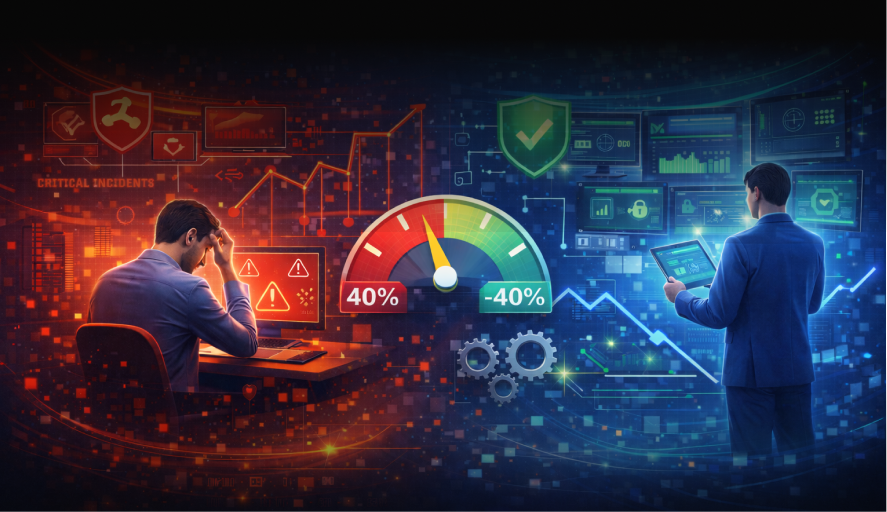
- 40% fewer critical incidents within 6 months
- 35% reduction in average downtime per incident
- 25% faster response and resolution times
2. Client Background
The client is a mid-sized professional services firm that relies heavily on email, collaboration tools, and line-of-business apps to serve its customers. Rapid growth over the last few years led to a more complex IT environment, including remote workers and multiple office locations. Their small internal IT team was overwhelmed and operated mostly in a reactive, “firefighting” mode.
3. Challenges (Before Managed IT)
Before partnering with the managed service provider, the client followed a traditional break-fix model, calling for support only when something went wrong. This created several pain points:
- Frequent, unplanned outages of critical systems during business hours.
- No centralized monitoring, so issues were often detected only after users complained.
- Inconsistent patching and outdated software, increasing security and stability risks.
- Overworked internal IT staff with no time for strategic projects.
- Poor visibility into overall IT health, incident trends, and root causes.
These problems translated into delayed client deliverables, frustrated employees, and a growing concern from leadership about the risk of a major outage.
4. Objectives and Requirements
Together, the client and the provider defined clear objectives for moving from break-fix to a managed IT model:
- Reduce the number and severity of critical IT incidents.
- Detect and resolve issues proactively before they impact users.
- Standardize patching, updates, and maintenance activities.
- Free up the internal IT team to focus on strategic initiatives rather than daily firefighting.
- Provide management with clear reporting on system health and incident trends.
5. Consulting Approach
The engagement began with a structured assessment to understand the current state and design the right managed services model:
- Conducted a full infrastructure and endpoint assessment (servers, network, endpoints, cloud services).
- Reviewed existing incident history, support tickets, and outage logs.
- Identified recurring failure points and gaps in monitoring, patching, and backup processes.
- Defined service levels (SLAs), response times, and escalation paths.
- Created a phased roadmap to transition from break-fix to continuous monitoring and managed services.
This consultative approach ensured that the solution aligned with both technical requirements and business priorities.
6. Solution Implemented
The provider implemented an integrated managed IT services solution with a focus on visibility, stability, and proactive intervention.
Infrastructure and Monitoring
- Deployed an RMM (Remote Monitoring and Management) platform across servers, network devices, and endpoints.
- Configured real-time alerts for CPU, memory, disk usage, network performance, and critical services.
- Set up health checks and automated scripts to resolve common, low-level issues before they escalated.
Patch Management and Maintenance
- Implemented a standardized patching policy for operating systems and key applications.
- Scheduled maintenance windows to apply updates outside business hours.
- Introduced automated reporting to verify patch compliance and highlight exceptions.
Helpdesk and Operations
- Established a 24/7 helpdesk with defined SLAs for incident response and resolution.
- Integrated ticketing with the monitoring platform so that alerts automatically created tickets.
- Implemented clear incident categorization and prioritization, ensuring critical issues received immediate attention.
Security and Resilience Enhancements
- Strengthened endpoint protection and centralized antivirus/EDR management.
- Reviewed backup and recovery procedures and tested restoration of critical systems.
- Documented standard operating procedures (SOPs) and escalation workflows for major incidents.
7. Results and Metrics
Within the first 6 months of transitioning to the managed IT model, the client experienced significant improvements:
- Critical incidents (P1 issues) dropped by approximately 40%, as many problems were detected and resolved before impacting users.
- Average downtime per incident decreased by about 35%, thanks to faster detection, clear SLAs, and predefined response steps.
- Response and resolution times improved by roughly 25%, supported by 24/7 monitoring and a dedicated helpdesk.
- Patch compliance increased to over 90% of systems within standard timelines, reducing vulnerability to known issues.
- The internal IT team recovered several hours per week previously lost to repetitive firefighting, enabling them to focus on strategic projects like application upgrades and user training.
These measurable outcomes translated into smoother day-to-day operations, fewer disruptions for staff, and greater confidence from leadership in the stability of their IT environment.
8. Client Quote or Testimonial
“Before this partnership, our IT team spent most of their time reacting to emergencies. Now, most issues are handled before our employees even notice. We’ve had far fewer outages, and when something does happen, it’s resolved quickly and professionally. This shift to managed IT has been a game changer for our business.”
9. Visuals and Technical Artifacts (Optional)
For your actual website case study, you can support the story with:
- A simple “Before vs After” diagram showing the move from ad-hoc support to centralized monitoring and managed services.
- A small chart showing the decline in critical incidents over 6–12 months.
- A sample dashboard screenshot (anonymized) showing system health, alerts, and ticket stats.
10. Call to Action
If your business is still relying on a break-fix model and dealing with unexpected outages, it may be time to switch to proactive managed IT. Contact our team to schedule a free infrastructure and monitoring assessment and see how continuous monitoring can reduce your critical incidents and downtime.