Moving workloads, applications, and data to the cloud requires more than simply transferring existing systems to a new environment. Businesses need to understand their current infrastructure, application requirements, security risks, and resource needs before starting the migration process. A cloud migration assessment helps organizations evaluate their readiness, identify potential challenges, estimate costs, and create a structured migration plan.
By assessing workloads and infrastructure before migration, businesses can make better decisions about what should be moved, optimized, replaced, or retained.

What Is a Cloud Migration Assessment?
A cloud migration assessment is a structured evaluation of an organization’s existing IT environment to determine how prepared it is for moving applications, workloads, and data to the cloud. The assessment reviews important areas such as infrastructure, applications, security controls, performance requirements, dependencies, and expected costs. It helps businesses understand their current environment and identify potential risks before migration begins. Organizations use cloud migration assessments to determine which workloads are suitable for cloud adoption, what changes may be required, and which migration approach best fits their business goals.
Unlike cloud migration itself, which focuses on moving and implementing workloads in a cloud environment, a cloud migration assessment focuses on analysis, planning, and decision-making before the migration process starts.
Why Is a Cloud Migration Assessment Important?
A cloud migration assessment helps businesses understand their existing technology environment before moving workloads to the cloud. Without proper assessment, organizations may face compatibility issues, security risks, inaccurate cost estimates, and performance challenges during or after migration. A structured assessment helps businesses reduce migration risks by reviewing infrastructure, applications, and dependencies.
It also improves cost planning by analyzing current resource usage, identifies compatibility issues by evaluating workload requirements, helps organizations understand security and compliance needs, and provides a clear migration roadmap for prioritizing workloads and selecting the right migration approach.
What Does a Cloud Migration Assessment Include?
A cloud migration assessment includes a detailed review of the systems, applications, security requirements, and resources involved in moving to the cloud. It helps businesses understand their current environment and identify the steps required for a successful migration.
Infrastructure Assessment
Infrastructure assessment involves reviewing existing servers, storage systems, networks, and cloud resources to understand the current technology environment. This process helps identify infrastructure requirements, resource usage, dependencies, and technical limitations that may affect migration planning.
Application and Workload Assessment
Application and workload assessment focuses on reviewing business applications and workloads before they are moved to the cloud. It includes analyzing application dependencies, performance requirements, and cloud suitability. This helps organizations determine which workloads can be migrated, optimized, or modernized based on business needs.
Security and Compliance Assessment
Security and compliance assessment evaluates existing security controls, potential risks, and compliance requirements related to cloud migration. This includes reviewing access controls, data protection requirements, security configurations, and other factors that can impact the security of cloud environments.
Cost and Resource Assessment
Cost and resource assessment helps organizations understand their current infrastructure expenses and estimate the resources required after migration. It evaluates cloud requirements, identifies optimization opportunities, and helps businesses plan their cloud investment more effectively.
Cloud Migration Assessment Framework
A cloud migration assessment framework provides a structured approach for evaluating whether an organization is ready to move its workloads, applications, and data to the cloud. It helps businesses review technical requirements, identify risks, and create a practical migration strategy.
A typical cloud migration assessment framework includes:
Current Environment Analysis
Reviewing existing infrastructure, applications, workloads, and dependencies to understand the current IT environment.
Application Evaluation
Analyzing applications to determine migration suitability, technical requirements, and potential modernization needs.
Security Review
Evaluating security controls, access management, data protection requirements, and compliance considerations.
Cost Analysis
Reviewing current infrastructure costs and estimating expected cloud expenses.
Migration Strategy Selection
Choosing the right migration approach based on business goals, technical requirements, and workload conditions.
Migration Roadmap Development
Creating a structured plan that defines migration priorities, timelines, and required activities.
Cloud Migration Assessment Checklist
A cloud migration assessment checklist helps organizations review important areas before moving workloads to the cloud. It provides a structured way to evaluate infrastructure, applications, security requirements, costs, and migration readiness.
Assessment Area | Key Things to Review |
Infrastructure | Servers, storage, networks, and existing cloud resources |
Applications | Dependencies, compatibility, and migration suitability |
Security | Access controls, vulnerabilities, and compliance requirements |
| Performance | Workload usage, scalability, and resource requirements |
| Cost | Current spending and projected cloud expenses |
| Migration Strategy | Selecting the right migration approach |
Cloud Migration Assessment Tools
Cloud migration assessment tools help organizations discover assets, analyze costs, evaluate performance, and identify potential migration risks. These tools provide visibility into existing environments and support better migration planning.
Discovery & Inventory Tools
Discovery and inventory tools help organizations identify existing systems, applications, servers, and resources within their environment. They provide visibility into infrastructure components and help teams understand application relationships before migration.
Cost Assessment Tools
Cost assessment tools help estimate cloud expenses by analyzing current resource usage and expected cloud requirements. These tools support budgeting decisions and help identify opportunities for improving cloud cost efficiency.
Security Assessment Tools
Security assessment tools help identify vulnerabilities, configuration issues, and potential security risks before workloads are migrated. They support security reviews by evaluating controls, access settings, and compliance requirements.
Performance Monitoring Tools
Performance monitoring tools help analyze workload behavior, resource usage, and application performance. This information helps organizations determine whether their workloads can operate effectively in a cloud environment.
AI in Cloud Migration Assessment
AI in cloud migration assessment helps organizations improve analysis, identify optimization opportunities, and support better migration decisions. AI-based capabilities can help businesses analyze large amounts of infrastructure data, identify patterns, and improve planning accuracy.
AI-Based Infrastructure Analysis
AI can support infrastructure analysis by automatically identifying resources, workloads, and relationships between systems. This helps organizations gain better visibility into their environment and understand dependencies before migration.
AI-Powered Cost Optimization
AI can analyze cloud usage patterns and resource requirements to identify potential cost optimization opportunities. By understanding workload behavior, businesses can make better decisions about resource allocation and cloud planning.
AI for Security and Risk Assessment
AI can support security analysis by identifying potential risks, detecting unusual patterns, and highlighting configuration issues. This helps organizations improve security planning and address potential concerns before moving workloads to the cloud.
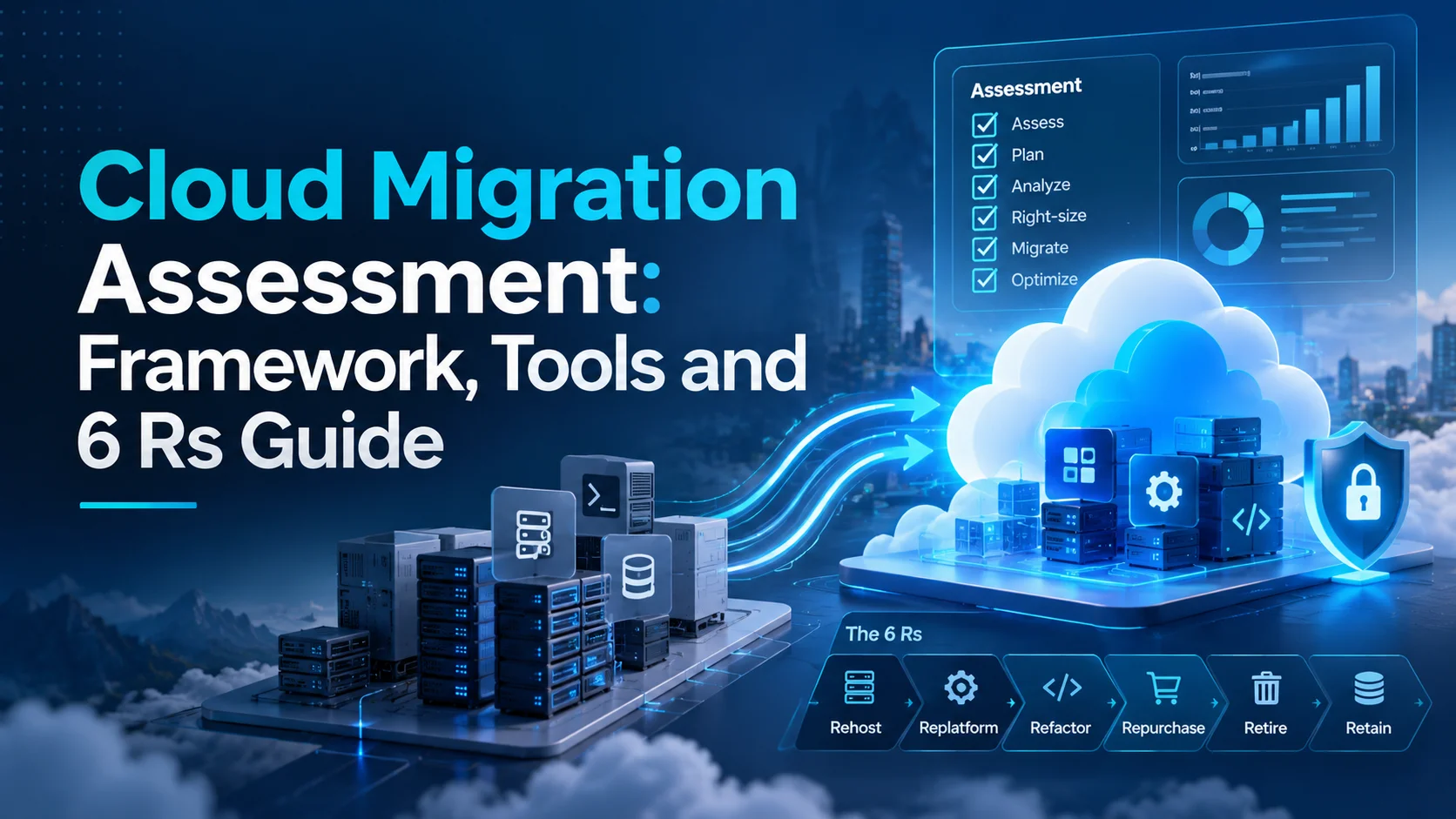
What Are the 6 Rs of Cloud Migration?
The 6 Rs of cloud migration are common strategies organizations use to decide how their workloads should be moved, modified, or retained during the migration process. Each approach depends on factors such as application requirements, business goals, cost considerations, and technical feasibility.
1. Rehost (Lift and Shift)
Rehosting involves moving applications from an existing environment to the cloud with minimal changes. This approach is often used when businesses want to migrate workloads quickly while avoiding major application modifications.
2. Replatform (Lift and Optimize)
Replatforming involves making limited improvements to applications while moving them to the cloud. This allows organizations to take advantage of certain cloud capabilities without completely redesigning their applications.
3. Refactor (Re-architect)
Refactoring involves redesigning applications to fully use cloud-native features and capabilities. This approach is suitable for organizations looking to improve scalability, performance, and long-term efficiency.
4. Repurchase
Repurchasing involves replacing existing applications with alternative solutions, often through Software-as-a-Service (SaaS) platforms. This can help businesses reduce maintenance requirements and adopt solutions that better support their current needs.
5. Retain
Retaining involves keeping certain workloads in their existing environment instead of migrating them. Organizations may choose this approach due to technical limitations, compliance requirements, or business priorities.
6. Retire
Retiring involves removing outdated, unnecessary, or unused applications before migration. This helps organizations reduce complexity, lower operational costs, and avoid moving workloads that no longer provide business value.
How to Perform a Cloud Migration Assessment?
A cloud migration assessment follows a structured process to evaluate infrastructure, applications, security requirements, and costs before moving workloads to the cloud. It helps organizations understand their current environment and create a practical migration plan.
1. Discover Infrastructure
The first step is identifying current systems, applications, workloads, and resources. This provides visibility into the existing environment and helps identify dependencies.
2. Analyze Workloads
Organizations review applications and workloads to understand technical requirements, relationships, and migration suitability.
3. Review Security Requirements
Security controls, data protection needs, and compliance requirements are reviewed to identify potential risks before migration.
4. Estimate Cloud Costs
Businesses analyze expected cloud requirements, resource usage, and potential expenses to create a realistic migration budget.
5. Select Migration Strategy
Based on assessment findings, organizations select the most suitable migration approach for each workload.
6. Create Migration Roadmap
The final step involves creating a structured migration plan that outlines priorities, timelines, and required activities.
Challenges of Cloud Migration Assessment
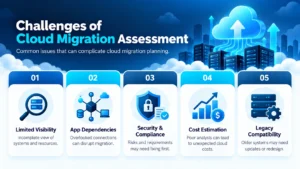
Cloud migration assessments help organizations prepare for migration, but the process can involve several challenges. Complex environments, limited visibility, security requirements, and unclear dependencies can make assessment more difficult without proper planning.
Limited Infrastructure Visibility
Organizations may not have complete visibility into their existing systems, applications, and resources. This can make it difficult to identify all components that need to be considered during migration planning.
Complex Application Dependencies
Applications often rely on connected systems, databases, and services. Understanding these dependencies is important because overlooked connections can create migration issues.
Security and Compliance Gaps
Existing security weaknesses, configuration issues, or compliance requirements may need to be addressed before moving workloads to the cloud.
Inaccurate Cost Estimation
Without detailed workload analysis, businesses may struggle to estimate cloud expenses accurately, which can lead to unexpected costs.
Legacy System Compatibility Issues
Older applications may not be designed for cloud environments and may require updates, modernization, or additional planning before migration.
How Cloud Migration Assessment Supports Security?
A cloud migration assessment helps organizations identify security requirements before moving workloads to the cloud. By reviewing security controls, access permissions, and data protection practices, businesses can understand potential risks and prepare appropriate safeguards.
Security-focused assessment activities help organizations identify security risks before migration, review access controls and data protection requirements, support compliance needs, and reduce risks during the cloud transition.
How CyberZEALS Helps Businesses With Cloud Migration Assessment Services
CyberZEALS helps businesses evaluate their cloud readiness, identify security risks, and prepare their environments for a secure cloud transition. Our cloud support service in th USA focus on understanding existing infrastructure, reviewing security requirements, and identifying areas that may impact successful cloud adoption.
- Cloud Security Assessment: CyberZEALS evaluates cloud environments to identify security risks, configuration issues, and potential gaps that may affect cloud migration.
- IT Security Audit Services: Our audits help organizations review security practices, identify control weaknesses, and improve overall security readiness during cloud migration planning.
- Compliance Assessment Support: CyberZEALS helps businesses review compliance requirements and identify areas where additional controls may be needed before cloud adoption.
Frequently Asked Questions
How long does a cloud migration assessment take?
The timeline depends on the size, complexity, and scope of the environment being assessed.
How much does a cloud migration assessment cost?
The cost depends on the number of workloads, systems, security requirements, and assessment scope.
What happens after a cloud migration assessment?
Organizations receive findings, recommendations, and a roadmap for the next migration steps.
What factors affect cloud migration assessment costs?
Costs are affected by infrastructure size, application complexity, compliance needs, and preparation requirements.
Can a cloud migration assessment improve migration planning?
Yes. It helps identify risks, evaluate workloads, and create a structured migration approach.
Do businesses need a cloud migration roadmap before moving to the cloud?
Yes. A roadmap helps define migration priorities, timelines, and required actions.