
Network Testing Services in the USA That Map Every Path Into Your Infrastructure
An attacker targeting your network does not need your credentials they need one exploitable condition, one misconfigured service, or one unpatched device. CyberZEALS provides network testing services across the USA that find those conditions through the same active techniques real attackers use, before the wrong person does.

Network Penetration Testing Service That Goes Beyond Port Scanning
A port scan tells you what is listening on your network. A network penetration testing service tells you what an attacker could do if they found the same open ports. Our testers move through the same phases a real attacker would from initial reconnaissance through service exploitation to lateral movement so you understand not just what is exposed, but what that exposure actually enables for someone actively trying to reach your most valuable assets.
Three Ways Our Network Pen Testing Finds What Scanners Miss
Automated vulnerability scanning identifies known issues by signature. Network pen testing finds what is actually exploitable by attempting it under controlled conditions.
- External Network Testing From the Attacker Perspective
External network testing begins with no prior knowledge of your environment and maps your internet-facing attack surface the way an outside attacker would identifying exposed services, testing perimeter defenses, and validating whether externally accessible systems can be exploited for initial access.
- Internal Network Testing Service for Lateral Movement
Internal network testing service simulates what an attacker who has already gained internal access could reach whether through a phishing success, a compromised endpoint, or a physical intrusion. This reveals the blast radius of an initial compromise rather than assuming perimeter controls prevent every attacker from getting inside.
- Network Vulnerability Testing With Validated Exploitation
Network vulnerability testing backed by controlled exploitation that confirms which findings are real, reproducible, and carry actual business risk rather than presenting scanner output that mixes genuine vulnerabilities with noise your team has to sort through.

Four Network Environments Our Network Security Testing Services Cover
Network environments differ in what they expose and how they can be exploited. Our network security testing services address each type through the attack techniques and testing depth that environment requires.
External Network Pen Test for Internet-Facing Assets
Your external network pen test covers every system reachable from the public internet web servers, mail systems, VPN gateways, remote access infrastructure, and cloud-hosted services. Testing includes service enumeration, vulnerability identification, exploitation of confirmed weaknesses, and documentation of how far an external attacker could advance into your environment from each successful entry point.
Internal Network Security Testing and Segmentation Review
Internal network security testing places our tester inside your network at a position representing a compromised internal system and tests whether your segmentation, access controls, and privilege escalation protections actually limit what that position can reach. This reveals whether an attacker who bypasses perimeter controls finds a flat, uncontrolled internal environment or one with genuine containment in place.
Wireless Network Security Testing for Corporate and Guest Environments
Wireless network security testing assesses your corporate and guest wireless infrastructure for authentication weaknesses, rogue access point exposure, protocol-level vulnerabilities, and the segmentation between wireless networks and wired internal systems that should prevent a wireless compromise from reaching internal assets.
Network Segmentation Testing to Validate Your Boundaries
Network segmentation testing specifically validates that the segments, VLANs, and firewall rules meant to separate sensitive systems from the rest of your network actually prevent traffic between them under real attack conditions. Compliance frameworks require segmentation controls. Segmentation testing confirms they work.
How Our Network Infrastructure Penetration Testing Engagement Runs
Every engagement follows a structured sequence that moves from open-source intelligence through exploitation and lateral movement so the findings reflect what a real attacker would discover, not just what a scanner would flag.
Engagement Scope and Authorization Agreement
Target IP ranges, domains, testing timeframes, and authorized activities confirmed before testing begins so the engagement stays within defined boundaries.
Passive and Active Network Reconnaissance
Open-source intelligence collection followed by active probing to build a complete picture of your network’s internet-facing and internal attack surface before any exploitation is attempted.
Service and Host Enumeration
Every reachable host and service within scope mapped, fingerprinted, and analyzed for the vulnerability conditions most likely to produce exploitable findings based on observed configuration.
Controlled Exploitation of Confirmed Vulnerabilities
Vulnerabilities validated as exploitable through controlled attack attempts that demonstrate actual impact rather than theoretical risk based on scanner output alone.
Lateral and Privilege Escalation Testing
From achieved access, further testing determines what additional systems and data are reachable through lateral movement, demonstrating the real business impact of the initial compromise.
Final Report Delivery and Debrief
Technical findings report with CVSS ratings, exploitation evidence, and remediation guidance delivered with a debrief session for your team.
Network Testing Services USA Built Around Real Threats
CyberZEALS scopes network pen testing services around your architecture, compliance needs, and threat profile so findings are practical, prioritized, and specific to your environment.

What Our Network Testing Engagement Delivers
01
Network Attack Surface Report
Full documentation of your tested attack surface with every finding mapped to the host and service that produced it.
02
Confirmed Vulnerability Register
Validated vulnerabilities only no unconfirmed scanner hits ranked by CVSS score and business impact.
03
Exploitation Evidence Per Finding
Screenshots and reproduction steps for every confirmed exploitable vulnerability.
04
Lateral Movement Path Documentation
Documented movement paths from initial access to the systems and data reached during post-exploitation testing.
05
Remediation Priority Roadmap
Findings ordered by risk with specific remediation guidance for each vulnerability category identified.
Our Process
Scoping and Target Confirmation
IP ranges, domains, and testing boundaries confirmed before any scanning begins.
Reconnaissance and Surface Mapping
Passive and active enumeration of your full network attack surface.
Vulnerability Identification and Validation
Automated scanning followed by manual confirmation of every finding before it enters the report.
Exploitation and Post-Access Testing
Confirmed vulnerabilities exploited to demonstrate impact and lateral movement tested from achieved access positions.
Report Delivery and Remediation Walkthrough
Findings report and debrief session with your technical and leadership teams.
Across Key Industries
Achieved targeted RPO/RTO with cloud backup and disaster recovery, ensuring rapid data restoration and uptime.
CyberZEALS transitioned pro services firm from break-fix to managed IT, slashing critical incidents 40% via continuous monitoring.
Five Outcomes Our Network Pen Test Services Consistently Produce

Validated Defenses Through Network Security Test
Your firewalls, segmentation policies, and access controls tested against real attack techniques rather than assumed to work because they were configured.

Exploitable Risk Confirmed and Ranked
Every finding confirmed through controlled exploitation so your remediation effort targets verified risk rather than a theoretical vulnerability list.

Compliance Evidence Produced Automatically
Network penetration testing documentation formatted for PCI DSS, HIPAA, and SOC 2 audit requirements without additional manual documentation effort.

Attacker Perspective From Recon Through Access
Findings from the full engagement reconnaissance through lateral movement show your security posture from the same perspective an attacker approaches your network with.

Actionable Remediation That Your Team Can Implement
Remediation guidance specific enough for your network team to implement without requiring additional security research to translate general recommendations into specific configuration changes.
Real Client Experiences
"CyberZEALS helped us identify weaknesses in our network environment through detailed testing. Their findings gave us clear steps to improve our security defenses."
Lucas Merritt
Network Security Engineer
"We needed better visibility into potential network risks. CyberZEALS provided thorough testing and practical recommendations to strengthen our infrastructure."
Harper Ellison
Infrastructure Security Analyst
"CyberZEALS helped us evaluate our network security and identify areas that needed improvement. Their testing approach provided valuable insights for our team."
Mason Callahan
Network Administrator
"The network testing process helped us better understand our security gaps. CyberZEALS delivered clear results and guidance that supported stronger protection."
Olivia Bennett
Security Operations Specialist
"CyberZEALS provided a detailed assessment of our network environment. Their team helped us identify vulnerabilities and improve our overall security readiness."
Carter Whitman
IT Security Manager
"We wanted to validate the security of our network infrastructure. CyberZEALS helped us uncover potential risks and provided recommendations to improve our defenses."
Nora Caldwell
Systems Engineer
Network Testing Questions Businesses Ask Before Getting Started
What is network penetration testing?
Network penetration testing simulates real attack techniques to identify and validate exploitable weaknesses across network infrastructure, services, and access controls.
What is the difference between network vulnerability testing and penetration testing?
Vulnerability testing identifies potential weaknesses, while penetration testing goes further by safely validating whether those weaknesses can actually be exploited.
Does CyberZEALS perform both internal and external network testing?
Yes. CyberZEALS can test internet-facing infrastructure from an external attacker perspective and internal environments to assess lateral movement and access controls.
Can CyberZEALS test wireless networks and network segmentation?
Yes. Testing can include corporate and guest wireless environments as well as segmentation controls, VLANs, and firewall boundaries.
What happens after a vulnerability is successfully exploited?
CyberZEALS may perform controlled post-access testing to determine what additional systems, privileges, or data could be reached from the initial compromise.
What does a network penetration testing report include?
The final report can include confirmed vulnerabilities, exploitation evidence, CVSS-based risk ratings, lateral movement paths, and prioritized remediation guidance.
Recent articles and News
from our blog
Moving workloads, applications, and data to the cloud requires more than simply transferring existing systems to a new environment. Businesses
Some security weaknesses are difficult to understand by looking only at what is visible from the outside. Problems may exist

Certain security threats only become visible when a user logs in, which presents a major issue for security businesses thinking
Security testing approaches may change based on how much information the tester receives before beginning the test. Black Box Penetration
Penetration testing helps organizations understand their security weaknesses, and the types of penetration testing in cybersecurity determine how different systems
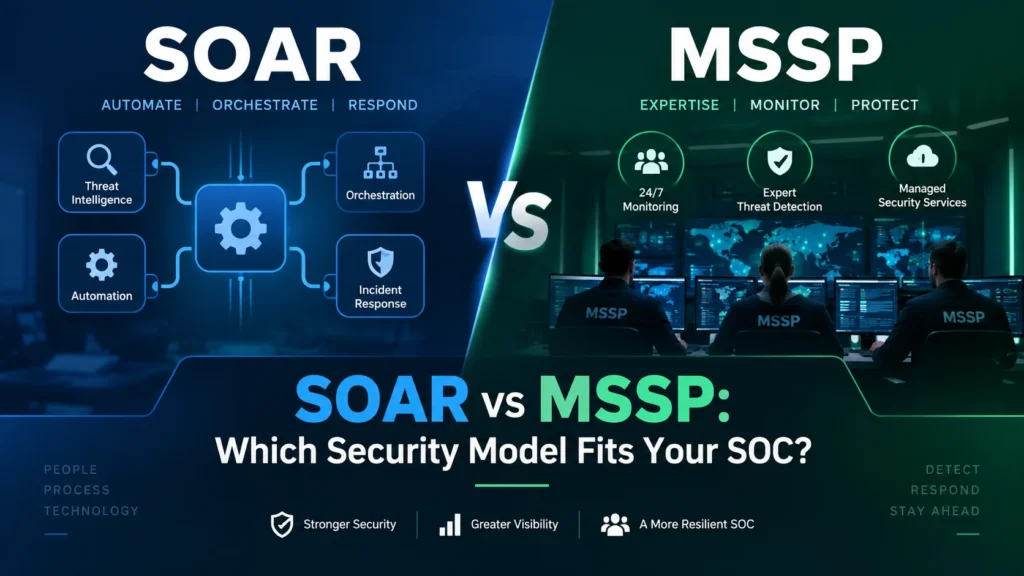
If you are researching SOAR vs MSSP, you are likely trying to strengthen detection and response without overbuilding your security
Share a few details about your needs, and we’ll connect you with the right specialist who can guide you on the next steps within one business day.